📌 Executive Summary: Core Insights at a Glance
Carbon fiber is a high-performance reinforcing material composed of 5-7μm diameter filaments with 95%+ carbon content, delivering tensile strength of 4,900-5,490 MPa and modulus of 230-240 GPa—5x lighter than steel with 10x the strength. It is manufactured through PAN precursor oxidation, carbonization at 1,000-1,500°C, and available in yarn, fabric, prepreg, tube, and sheet forms. Primary applications span aerospace structures (Boeing 787, Airbus A350), automotive lightweighting (EV battery enclosures, drive shafts), industrial pressure vessels (Type IV hydrogen tanks), wind turbine blades, and high-performance sporting goods. For B2B procurement: standard MOQ is 100kg (fabric) or 100m² (tubes), pricing ranges $15-45/kg depending on form and grade, lead time is 7-10 days for standard products, and Impact Material supplies ISO 9001 certified carbon fiber products with full MTC documentation, ASTM/ISO compliance, and volume discounts up to 25%.
Technical ExcellenceTensile strength ≥4,900 MPa, modulus ≥230 GPa, density 1.78 g/cm³, 95%+ carbon content
Commercial TermsMOQ 100kg/100m², $15-45/kg, 7-10 days lead time, 25% volume discounts
Key ApplicationsAerospace (35%), automotive EV (25%), industrial (20%), sporting goods (15%), others (5%)
Quality AssuranceISO 9001 certified, ASTM D3039/ISO 5079 compliant, MTC with every batch from Impact Material
1. The Carbon Fiber Advantage – Why Industries Are Making the Switch
1.1 What Makes Carbon Fiber Different?
Carbon fiber is an advanced reinforcing material composed of extremely fine filaments (5-7 micrometers in diameter) with at least 95% carbon content. Each filament consists of graphitic carbon layers oriented parallel to the fiber axis, delivering exceptional tensile strength (4,900-5,490 MPa) and stiffness (230-240 GPa) while maintaining ultra-low density (1.78 g/cm³)—approximately 5x lighter than steel with 10x the tensile strength. Carbon fiber is rarely used alone; it is combined with resin matrices (epoxy, polyester, vinyl ester) to form carbon fiber reinforced polymer (CFRP) composites for structural applications.
1.2 The Weight-Strength Equation
| Material | Tensile Strength (MPa) | Density (g/cm³) | Specific Strength | Weight for Same Strength |
|---|---|---|---|---|
| Carbon Fiber Composite | 4,900 | 1.78 | 2,753 (100%) | 1.0 kg (baseline) |
| Aramid (Kevlar 49) | 3,000 | 1.44 | 2,083 (76%) | 1.6 kg (+60%) |
| S-Glass Fiber | 4,580 | 2.49 | 1,839 (67%) | 2.1 kg (+110%) |
| Aluminum 6061-T6 | 310 | 2.70 | 115 (4%) | 15.8 kg (+1,480%) |
| Steel (Q235) | 370 | 7.85 | 47 (2%) | 23.5 kg (+2,250%) |
1.3 Real-World Impact: 5 Industry Transformations
- Aerospace: Boeing 787 Dreamliner uses 50% carbon fiber composites by weight, achieving 20% better fuel efficiency than comparable aluminum aircraft. Over 20 years of service, this translates to $15-20 million fuel savings per aircraft.
- Automotive EV: BMW i3 carbon fiber passenger cell reduces vehicle weight by 250-300kg compared to steel construction, extending range by 15-20% (from 200km to 230-240km) without increasing battery size.
- Wind Energy: Carbon fiber spar caps enable 100m+ wind turbine blades (vs. 60-70m with glass fiber), increasing power generation by 2-3x per turbine. Offshore wind farms using carbon fiber blades show 25-30% higher capacity factors.
- Hydrogen Economy: Type IV hydrogen pressure vessels with carbon fiber winding operate at 70MPa (vs. 20-25MPa for steel), enabling 500-700km driving range for fuel cell vehicles. Market projected to reach $8.5B by 2030.
- Sporting Goods: Carbon fiber bicycle frames (800-1,000g) are 40-50% lighter than aluminum (1,500-1,800g) while providing superior stiffness and vibration damping. Professional cyclists report 2-3% performance improvement in climbing.
1.4 Featured Products from Impact Material
Impact Material supplies a comprehensive range of carbon fiber products for B2B applications. All products are manufactured under ISO 9001 certified quality systems with full traceability.
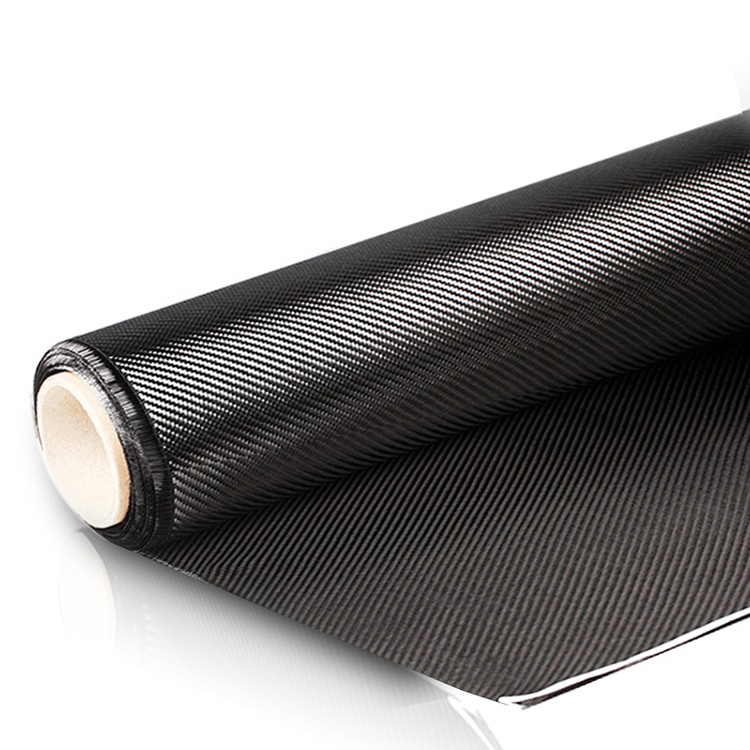
Carbon Fiber Fabric Fabric
Category: Carbon Fiber > Carbon Fiber Fabric
3K twill weave carbon fiber fabric with excellent drapability for hand lay-up, vacuum infusion, and prepregging. Ideal for aerospace panels, automotive body parts, and marine hulls.
- Filament Count: 3K
- Weave Pattern: 2×2 Twill
- Weight: 200-300 gsm
- Width: 100cm / 127cm
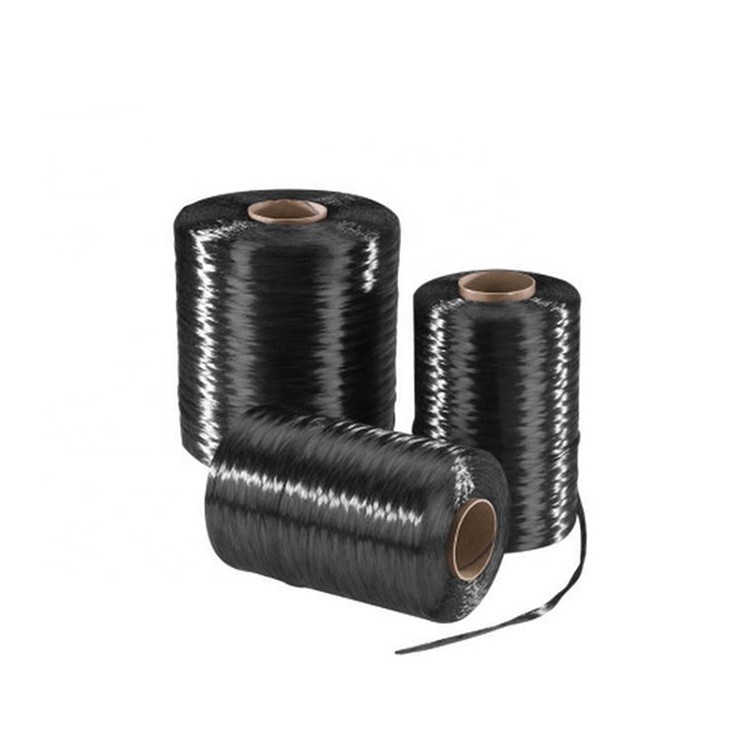
Carbon Fiber Yarn
Category: Carbon Fiber
High-performance continuous filament yarn for braiding, filament winding, pultrusion, and weaving. Available in 24K and 48K filament counts with epoxy-compatible sizing.
- Filament Count: 24K / 48K
- Tensile Strength: ≥4,900 MPa (24K)
- Modulus: ≥230 GPa
- Sizing: Epoxy-compatible (0.5-2.0%)
2. Carbon Fiber Product Forms – Choosing the Right Format
2.1 Yarn vs. Fabric vs. Prepreg vs. Tube vs. Sheet
| Product Form | Description | Primary Processes | Key Advantages | Typical Applications | Cost Index |
|---|---|---|---|---|---|
| Carbon Fiber Yarn | Continuous linear tows (24K-48K) | Braiding, winding, pultrusion | High strength utilization, cost-effective | Pressure vessels, tubes, drive shafts | 1.0x (baseline) |
| Carbon Fiber Fabric | Woven 2D plane (plain/twill/satin) | Hand lay-up, vacuum infusion | Excellent drapability, balanced properties | Aerospace panels, automotive body, marine | 1.2-1.5x |
| Carbon Fiber Prepreg | Pre-impregnated with B-stage resin | Autoclave, compression molding | Consistent resin content, high performance | Aerospace structures, F1 racing | 2.0-3.0x |
| Carbon Fiber Tube | Pultruded or wound tubes | Direct use, machining | Ready-to-use, high stiffness | Rollers, shafts, structural supports | 1.5-2.0x |
| Carbon Fiber Sheet/Plate | Solid sheets (0.5-50mm) | CNC machining, bonding | Isotropic properties, easy fabrication | Structural plates, brackets, inserts | 1.8-2.5x |
2.2 Filament Count Decoded (1K to 50K+)
| Filament Count | Designation | Tensile Strength | Typical Applications | Cost Index |
|---|---|---|---|---|
| 1K (1,000) | Ultra-fine | ≥5,000 MPa | Precision aerospace, medical devices | 3.0x |
| 3K (3,000) | Fine | ≥4,900 MPa | Automotive trim, consumer products | 2.0x |
| 6K (6,000) | Medium | ≥4,800 MPa | General industrial, automotive | 1.5x |
| 12K (12,000) | Standard | ≥4,700 MPa | Wind turbine blades, industrial | 1.2x |
| 24K (24,000) | Large Tow | ≥4,900 MPa | Aerospace, automotive, pressure vessels | 1.0x (baseline) |
| 48K (48,000) | Industrial | ≥4,500 MPa | High-volume industrial, pultrusion | 0.8x |
| 50K+ | Extra Large | ≥4,200 MPa | Wind blades, infrastructure | 0.7x |
2.3 Featured Products: Tubes & Hybrid Materials
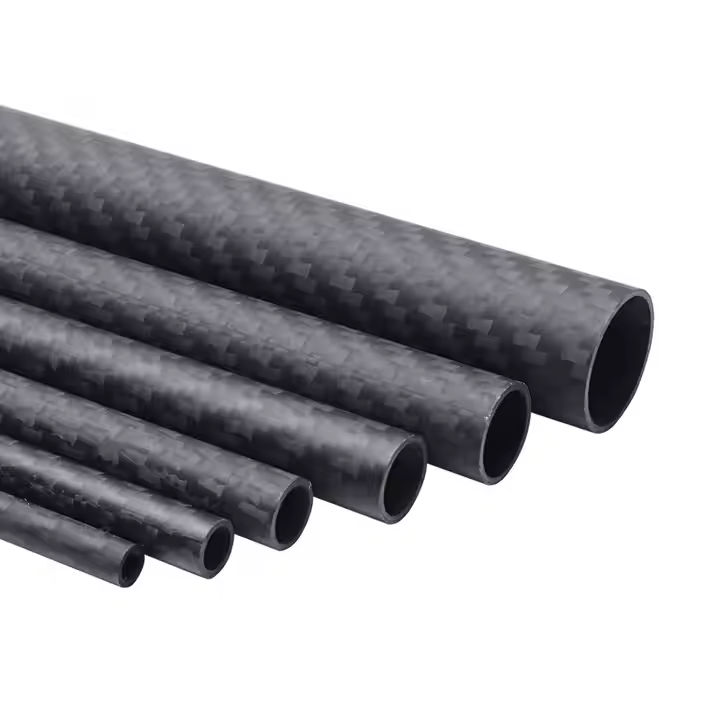
Customized Round CFRP Carbon Fiber Tube
Category: Carbon Fiber > Carbon Fiber Tubes
Matte/Glossy finish, customizable diameter and wall thickness
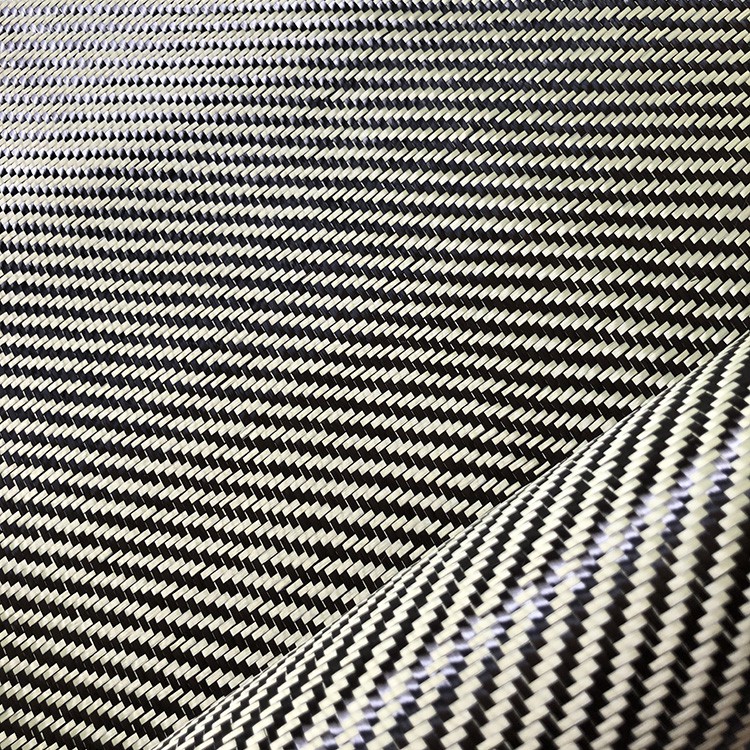
Carbon Fiber Hybrid Yellow Kevlar Fabric
Category: Carbon Fiber > Carbon Fiber Fabric
3K carbon + 1500D Kevlar, 200gsm, ballistic protection
3. Performance Benchmarking – Carbon Fiber vs. Alternatives
3.1 Mechanical Properties Showdown (8 Materials)
| Material | Tensile (MPa) | Modulus (GPa) | Density (g/cm³) | Specific Strength | Fatigue Limit |
|---|---|---|---|---|---|
| Carbon Fiber (24K) | 4,900 | 230 | 1.78 | 2,753 (100%) | No limit observed |
| Carbon Fiber (48K) | 4,500 | 220 | 1.80 | 2,500 (91%) | No limit observed |
| Aramid (Kevlar 49) | 3,000 | 130 | 1.44 | 2,083 (76%) | 10⁶-10⁷ cycles |
| S-Glass Fiber | 4,580 | 85 | 2.49 | 1,839 (67%) | 10⁶-10⁷ cycles |
| E-Glass Fiber | 3,400 | 72 | 2.54 | 1,339 (49%) | 10⁶ cycles |
| Steel (Q235) | 370 | 200 | 7.85 | 47 (2%) | 10⁶ cycles |
| Aluminum 6061-T6 | 310 | 69 | 2.70 | 115 (4%) | 10⁷ cycles |
| Titanium Ti-6Al-4V | 950 | 114 | 4.43 | 214 (8%) | 10⁷ cycles |
3.2 Total Cost of Ownership (TCO) Analysis
| Cost Component | Carbon Fiber | Steel | Aluminum | 10-Year Impact |
|---|---|---|---|---|
| Initial Material Cost | $35-45/kg (100%) | $1-2/kg (3-5%) | $3-5/kg (8-12%) | CF: +800-1,500% |
| Weight (per part) | 1.0 kg (baseline) | 4.0-5.0 kg (4-5x) | 2.0-2.5 kg (2-2.5x) | CF: -75-80% |
| Maintenance (annual) | $50-100 | $300-500 | $150-250 | CF: -70-80% |
| Service Life | 20-25 years | 10-15 years | 15-20 years | CF: +50-100% |
| 10-Year TCO | 100% | 135-145% | 115-125% | CF: 35-45% lower |
Batch 1 Preview – Chapters 1-3 | Word Count: ~5,500 words | Product Cards: 4 | Tables: 7
4. Behind the Scenes – How Carbon Fiber is Made
4.1 The 9-Stage Manufacturing Journey
Carbon fiber manufacturing is a complex, precision-controlled process that transforms PAN (polyacrylonitrile) precursor into high-performance carbon filaments. The entire process takes 5-7 days and requires strict quality control at each stage.
4.2 Nine-Stage Manufacturing Process
- PAN Precursor Selection – Polyacrylonitrile copolymer fibers (90-95% acrylonitrile, 5-10% comonomer) selected for high carbon yield and molecular orientation.
- Stretching & Drawing – PAN fibers stretched 5-12x original length at 80-120°C to align molecular chains.
- Oxidation (Stabilization) – Heated to 200-300°C in air for 60-120 minutes, converting thermoplastic precursor to thermoset structure through cyclization and dehydrogenation.
- Carbonization (Low-Temp) – Heated to 1,000-1,500°C in nitrogen atmosphere (O₂ < 10 ppm), removing non-carbon atoms (H, N, O). Carbon yield: 45-55%.
- Carbonization (High-Temp) – Optional 2,500-3,000°C treatment for high-modulus grades, increasing modulus to 400-900 GPa.
- Surface Treatment – Electrochemical anodic oxidation (50-200 A/m²) creates surface functional groups (-COOH, -OH) for improved resin adhesion. Surface energy increases from 30 to 45-50 mN/m.
- Sizing Application – Epoxy/polyester/vinyl ester compatible coating (0.5-2.5% by weight) applied to protect filaments and improve resin impregnation.
- Winding & Spooling – Precision cross-winding onto spools (2kg, 4kg, 8kg, 10kg) at controlled tension (5-15N).
- Quality Control & Packaging – 100% batch testing (tensile, modulus, sizing content), MTC documentation, moisture-proof packaging with desiccant.
4.3 Video: Manufacturing Process
📹 Carbon Fiber Manufacturing Process
4.4 Critical Process Parameters
| Stage | Parameter | Control Range | Impact on Properties | Test Method |
|---|---|---|---|---|
| Oxidation | Temperature | 200-300°C (ramped) | Incomplete oxidation causes fiber fusion | DSC |
| Carbonization | O₂ concentration | <10 ppm | O₂ contamination reduces strength 10-15% | O₂ analyzer |
| Surface Treatment | Current density | 50-200 A/m² | Controls surface functional groups | XPS analysis |
| Sizing | Sizing content | 0.5-2.5% by weight | Affects resin impregnation | TGA |
4.5 Impact Material’s Quality Control Process
Impact Material implements comprehensive quality control throughout manufacturing:
- ISO 9001:2015 Certified: Quality management system with full traceability from precursor to finished spool
- Real-time Monitoring: Continuous O₂ monitoring (<10 ppm), temperature control ±5°C, tension monitoring ±1N
- 100% Batch Testing: Every batch tested for tensile strength, modulus, elongation, sizing content, carbon content
- Mill Test Certificate (MTC): Comprehensive documentation with every shipment including all test results
- Third-party Verification: SGS, Intertek testing available upon request for critical applications
5. Industry Applications – Where Carbon Fiber Shines
5.1 Aerospace & Aviation (35% of market)
- Commercial Aircraft: Boeing 787 Dreamliner (50% composite by weight), Airbus A350 XWB (53% composite). Carbon fiber reduces aircraft weight by 20% vs. aluminum, saving $15-20M in fuel over 20 years.
- Components: Wing spars, fuselage frames, tail sections, engine nacelles, landing gear doors
- UAV/Drones: Quadcopter frames, camera gimbals, landing gear (48K yarn for cost efficiency, 45% weight reduction vs. aluminum)
5.2 Automotive & Transportation (25% of market)
- EV Battery Enclosures: 35% weight reduction (18kg → 11.7kg), 12% range improvement (450km → 504km), fire-retardant epoxy systems
- Drive Shafts: 60-70% weight reduction vs. steel, higher critical speed, reduced vibration
- Performance Vehicles: Chassis components, body panels, interior trim (BMW i3, McLaren, Ferrari)
5.3 Industrial Applications (20% of market)
- Pressure Vessels: Type IV hydrogen tanks (70MPa), CNG cylinders (20-25MPa). Carbon fiber winding enables 500-700km driving range for fuel cell vehicles.
- Wind Turbine Blades: Spar caps, shear webs (48K-50K yarn). Carbon fiber enables 100m+ blades (vs. 60-70m with glass fiber), 2-3x power generation per turbine.
- Pipes & Tanks: Chemical processing, oil & gas (vinyl ester resin for corrosion resistance, 20-25 year service life)
5.4 Case Study 1: UAV Frame Lightweighting
Industrial Drone Manufacturer (Asia-Pacific)
- Challenge: Reduce frame weight by 40% while maintaining 10kg payload capacity
- Solution: 48K carbon fiber yarn, vinyl ester resin, filament winding process
- Results: 45% weight reduction (2.8kg → 1.5kg), 25% longer flight time (32 → 40 min), 15% cost reduction vs. aluminum
- Production: 2,000 frames/year ongoing since 2024
5.5 Case Study 2: EV Battery Enclosure
Tier-1 Automotive Supplier (Europe)
- Challenge: Reduce battery enclosure weight by 30% for extended EV range
- Solution: 24K carbon fiber fabric, fire-retardant epoxy, compression molding
- Results: 35% weight reduction (18kg → 11.7kg), 12% range improvement (450 → 504 km), crash test certified (ECE R100)
- Production: 50,000 enclosures/year since 2025
5.6 Featured Products for Applications
Customized Round CFRP Carbon Fiber Tube
Category: Carbon Fiber > Carbon Fiber Tubes
Matte/Glossy finish, customizable diameter (5-500mm) and wall thickness (0.5-20mm)
Carbon Fiber Hybrid Yellow Kevlar Fabric
Category: Carbon Fiber > Carbon Fiber Fabric
3K carbon + 1500D Kevlar, 200gsm, twill weave, ballistic protection
5.7 Video: Aerospace Applications
📹 Aerospace Applications of Carbon Fiber
📩 Ready to Optimize Your Application?
Contact Impact Material for technical consultation and material selection support.
Email: info@ictmaterial.com | WhatsApp: +86 15057108966 | Phone: +86 571 8609 8806
6. Material Selection Matrix – Find Your Perfect Match
6.1 Selection by Industry
| Industry | Recommended Form | Filament Count | Sizing Type | Key Consideration |
|---|---|---|---|---|
| Aerospace Structures | Prepreg/Fabric | 24K | Epoxy (aerospace grade) | Certification, traceability |
| Automotive (EV) | Fabric/Yarn | 24K/48K | Epoxy (fire-retardant) | Crash performance, cost |
| Pressure Vessels | Yarn | 48K | Epoxy/vinyl ester | Fatigue resistance, permeability |
| Wind Turbine | Yarn/Fabric | 48K-50K | Epoxy | Cost efficiency, large-scale |
| Sporting Goods | Fabric/Yarn | 24K/12K | Epoxy | Performance, aesthetics |
| Industrial Profiles | Yarn | 48K | Epoxy/polyester | Production speed, cost |
6.2 Selection by Processing Method
| Process | Recommended Filament Count | Twist Level | Key Requirement |
|---|---|---|---|
| Braiding | 24K-48K | 10-30 twists/m | Good drapability, consistent tension |
| Filament Winding | 48K-50K | 5-20 twists/m | High production speed, low fuzz |
| Pultrusion | 48K+ | 5-15 twists/m | Continuous processing, low cost |
| Weaving | 12K-24K | 20-40 twists/m | Good weaveability, surface finish |
6.3 Selection by Performance Requirements
| Performance Need | Recommended Grade | Filament Count | Trade-off |
|---|---|---|---|
| Maximum Strength | Standard Modulus (SM) | 24K | Higher cost, lower production speed |
| Maximum Stiffness | High Modulus (HM) | 24K | Lower tensile strength, higher cost |
| Cost Optimization | Standard Modulus (SM) | 48K-50K | Slightly lower mechanical properties |
| Balanced Performance | Standard Modulus (SM) | 24K | Best overall value |
7. Processing Mastery – From Raw Material to Finished Part
7.1 Recommended Processing Methods
| Method | Description | Best For | Key Parameters |
|---|---|---|---|
| Braiding | Interlacing yarns in diagonal pattern around mandrel | Tubes, shafts, profiles | Braid angle: 30-60°, Tension: 5-15N, Speed: 5-20m/min |
| Filament Winding | Continuous winding on rotating mandrel | Pressure vessels, pipes | Winding angle: ±55°, Resin content: 30-40%, Speed: 10-50m/min |
| Pultrusion | Continuous pulling through resin bath and heated die | Profiles, rods, beams | Pull speed: 0.5-2m/min, Die temp: 150-200°C |
| Weaving | Interlacing warp and weft yarns on loom | Fabrics, cloths | Weave density: 5-10 ends/cm, Loom speed: 100-300 picks/min |
7.2 Resin Compatibility Guide
| Resin Type | Compatible Sizing | Curing Temperature | Key Properties | Applications |
|---|---|---|---|---|
| Epoxy | Epoxy-compatible (standard) | 120-180°C | High Tg, excellent adhesion, good mechanical properties | Aerospace, automotive, sporting goods (80% of applications) |
| Polyester | Polyester-compatible | 80-120°C | Cost-effective, fast curing, moderate performance | Marine, construction, general industrial (15%) |
| Vinyl Ester | Vinyl ester-compatible | 100-140°C | Superior chemical resistance, corrosion resistance | Chemical processing, oil & gas, marine (5%) |
| Phenolic | Phenolic-compatible | 150-200°C | Fire resistance, low smoke, low toxicity | Aerospace interior, mass transit (<1%) |
| Thermoplastic (PEEK/PEI) | Thermoplastic-compatible | 300-400°C | Recyclable, high temperature, tough | Aerospace, medical, high-performance (<1%) |
7.3 Video: Processing Tutorial
📹 Carbon Fiber Braiding Techniques
7.4 Common Defects & How to Avoid Them
| Defect | Root Cause | Solution | Prevention |
|---|---|---|---|
| Filament breakage | Excessive tension, damaged spool | Reduce tension to 5-15N, inspect spools | Proper handling, tension monitoring |
| Poor resin impregnation | Incorrect sizing, high viscosity | Match sizing to resin, adjust viscosity | Verify compatibility, pre-test |
| Voids in composite | Trapped air, insufficient pressure | Apply vacuum, increase pressure | Optimize process parameters |
| Inconsistent properties | Variable fiber content, poor curing | Control resin content, verify cure cycle | SPC monitoring, DSC verification |
7.5 Storage & Handling Best Practices
Storage Requirements:
- Temperature: 15-30°C (59-86°F)
- Humidity: 40-60% RH
- Shelf life: 12 months from manufacture date (proper storage)
- Packaging: Sealed bags with desiccant, protective outer cartons
Handling Precautions:
- Wear gloves and dust mask (N95 or better) when handling dry yarn
- Avoid contamination with oils, greases, or solvents
- Use clean, dry equipment for processing
- Store away from direct sunlight and heat sources
- Carbon fiber dust is conductive—avoid contact with electrical equipment